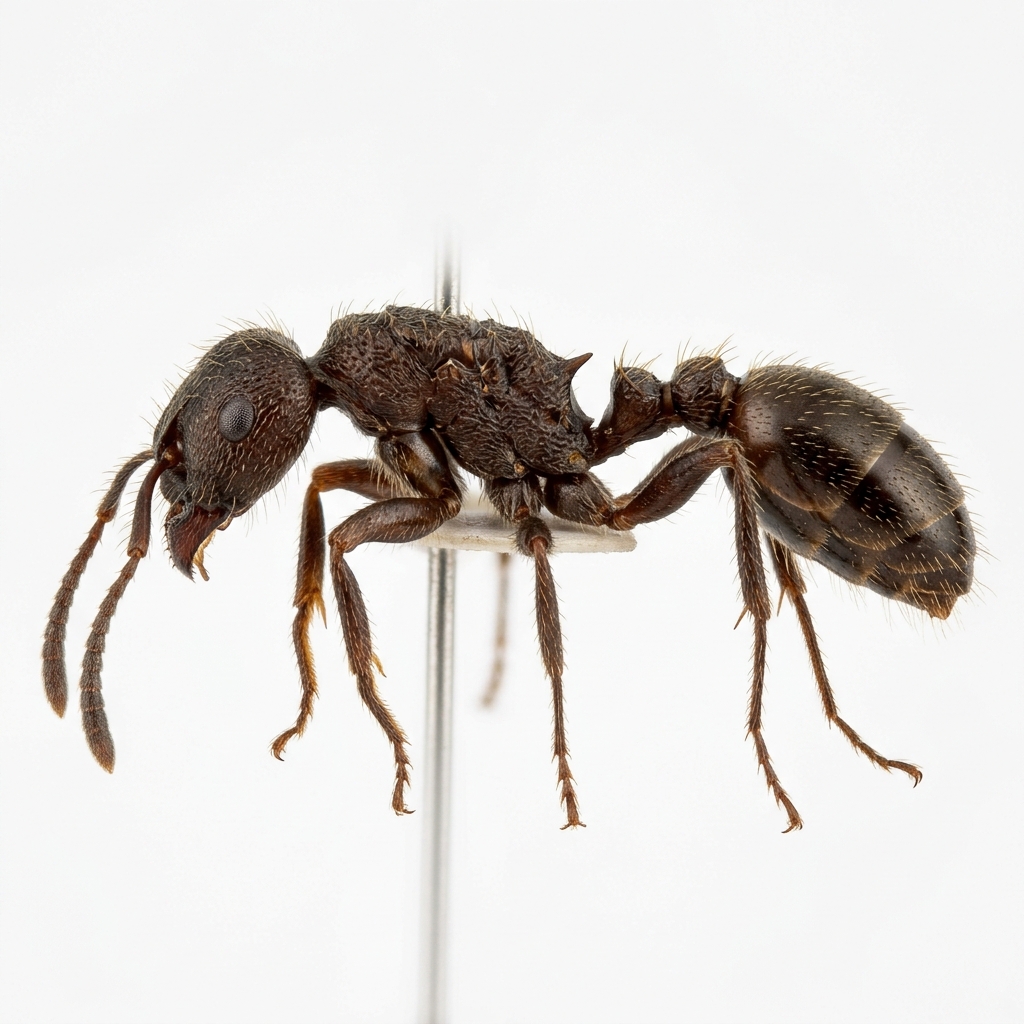
Utah County is home to several ant species that invade homes seeking food and water. From tiny sugar ants trailing across your kitchen counter to large carpenter ants that can damage wood structures, understanding which ant you're dealing with is the first step toward elimination.
Several ants species are found in Utah County homes. Here are the most common:
Small (⅛"), dark brown to black. The most common ant invading Utah homes. Nests in cracks in pavement, foundations, and under stones. Trails along baseboards seeking sweet and greasy foods.
Large (¼"–½"), black or dark brown. Unlike termites, they don't eat wood but excavate galleries for nesting, leaving behind sawdust-like frass. Found in moist, decaying wood — window frames, deck posts, and tree stumps.
Tiny (1/16"–⅛"), dark brown. Emits a rotten coconut smell when crushed. Forms massive colonies with multiple queens, making DIY treatment difficult. Prefers sweet foods.
Ants build colonies near reliable food and water sources. Indoors, they trail along baseboards, countertops, and plumbing lines. Outdoors, look for mounds in lawns, along sidewalks, and at foundation edges. Carpenter ants target moist wood — check around leaky windows, bathrooms, and where wood contacts soil.
Watch for these indicators that ants have become a problem in your home:
Most Utah ants are nuisance pests that contaminate food. Carpenter ants, however, can cause significant structural damage over time by hollowing out wood for nesting. Fire ants (rare in Utah) can deliver painful stings. All ant species can introduce bacteria to food preparation surfaces.
Keep ants out of your home with these proven strategies:
Our ant treatment goes beyond just spraying — we target the colony itself to eliminate the problem at its source:
Most over-the-counter sprays only kill the ants you can see — the foragers. The queen (or queens) remain safe deep in the colony, continuing to lay eggs. Professional treatments use targeted baits that workers carry back to the colony, eliminating the queen and the entire nest.
Yes, particularly in homes near wooded areas or with moisture issues. They're most active from March through October. Unlike termites, carpenter ants don't eat wood — they excavate it for nesting. Look for small piles of wood shavings near baseboards or windowsills.
Ant activity peaks from April through September when temperatures are warm. However, ants can remain active year-round inside heated structures. Spring is the ideal time for preventive treatment.
Schedule your free inspection and let our certified technicians identify the problem and create a custom treatment plan.
Or call us: 801-372-5093