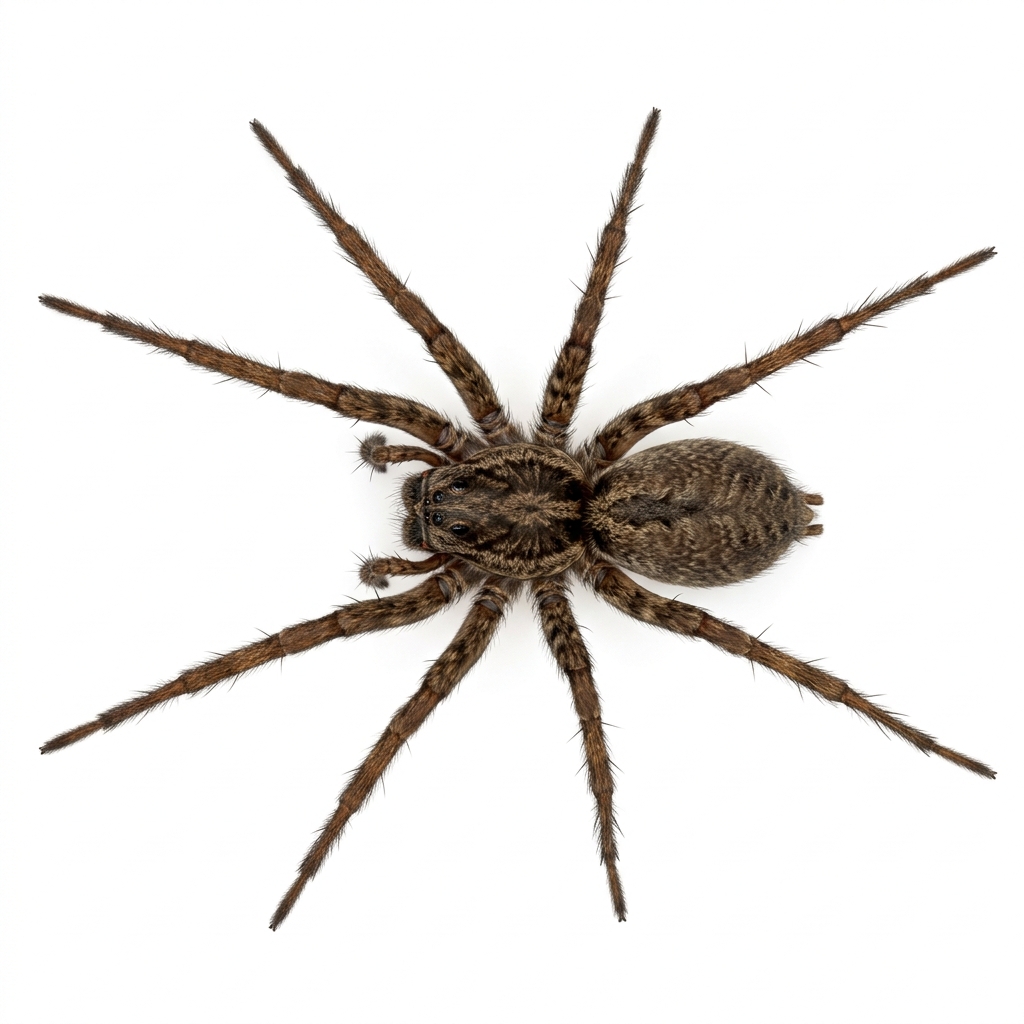
Utah County is home to over 600 spider species, from the common house spider to the venomous black widow. While most are harmless, knowing which spiders pose a risk — and how to keep them out — is essential for every homeowner.
All spiders share a few key features: eight legs, two body segments (cephalothorax and abdomen), and no wings or antennae. Beyond that, identifying which spider you're dealing with comes down to color, size, web type, and behavior. Here are the species most commonly found in Utah County homes:
Brown with a chevron (herringbone) pattern on the abdomen. Body length ½"–¾". Builds funnel-shaped webs at ground level. Very common in Utah basements, window wells, and garages. Once considered medically significant, but the CDC has since removed it from their list of venomous spiders.
Shiny black body with a distinctive red hourglass marking on the underside of the abdomen. Female body length ~½". The only medically significant spider in Utah — bites can cause severe muscle pain, cramping, and systemic symptoms. Found in undisturbed areas: woodpiles, garages, storage sheds, and meter boxes.
Large, robust spiders (body ½"–1"+) with brown or gray coloring and striped markings on the legs. Ground hunters — they don't build webs to catch prey. Often found running across floors, especially in the evening. Females carry egg sacs and then their young on their backs. Harmless to humans but alarming due to their size.
Small (⅛"–¼" body), yellowish-brown with mottled patterns. Builds tangled, irregular cobwebs in corners, windows, and basements. Harmless and the most frequently encountered spider indoors in Utah County.
Spiders are attracted to your home for one primary reason: food. Where there are insects, spiders will follow. Understanding their habitat preferences helps you target prevention efforts.
Spiders prefer dark, undisturbed areas with access to prey insects. Common indoor hotspots include:
Around the exterior of your home, spiders congregate near:
A few spiders here and there is normal. But when you notice any of these signs, it's time to call a professional:
The vast majority of Utah spiders are harmless to humans. However, there are important exceptions:
While spiders don't cause structural damage, heavy infestations create unsightly webs, stain surfaces with droppings, and cause significant psychological distress for occupants.
Understanding when spiders are most active helps you plan prevention and treatment:
Spiderlings hatch from overwintering egg sacs. Young spiders begin dispersing throughout homes and yards. This is the ideal time for the first preventive treatment.
Peak prey insect season drives spider population growth. Webs appear rapidly around exterior lights and eaves. Outdoor activity increases.
Peak spider season. Male spiders actively search for mates, leading to increased indoor sightings. Spiders also seek warm indoor shelter as temperatures drop — homeowners report the most spider issues during this period.
Activity decreases significantly. Most spiders find sheltered spots and become dormant. Indoor sightings are less common but do occur in heated areas.
The best spider control strategy starts with making your home less attractive to them. Here's what you can do:
The single most effective spider prevention strategy is eliminating their food supply. Regular general pest control dramatically reduces spider populations by cutting off their food source.
Switch outdoor lights to yellow or sodium vapor bulbs that attract fewer flying insects. Move lights away from doorways when possible, or use motion-activated fixtures.
Caulk cracks around windows, doors, and foundations. Install door sweeps and repair torn window screens. Pay special attention to gaps around utility pipes and wiring.
Keep woodpiles at least 20 feet from your home. Remove yard debris, leaf litter, and dense ground cover near foundations. Clear window wells of debris regularly.
Knock down webs around your home's exterior weekly, especially around eaves, porch lights, and windows. This discourages spiders from re-establishing in the same locations.
In basements and garages, use sealed plastic storage bins instead of cardboard boxes. Keep storage areas organized and off the floor when possible.
Our certified technicians use a targeted, multi-step approach to eliminate spiders from your Utah County home:
No. Despite common misconception, brown recluse spiders are not established in Utah. The spiders most often mistaken for brown recluses in our area are hobo spiders and woodlouse spiders. If you're unsure what spider you've found, our technicians can identify it during a free inspection.
Black widow bites are painful and can cause systemic symptoms like muscle cramps and nausea, but fatalities are extremely rare with modern medical care. They are not aggressive — bites typically occur when a widow is accidentally pressed against skin (reaching into a woodpile, putting on an old shoe, etc.). If bitten, seek medical attention.
Fall is mating season for many spider species. Male spiders leave their webs and actively roam in search of females, which is why you see more of them running across floors and walls. Additionally, as outdoor temperatures drop, spiders seek the warmth of your home.
Absolutely. All of our products are specifically chosen for residential use. Once dry (typically 30–60 minutes), treated surfaces pose no concern for your household. We always discuss our products with you before treatment and address any specific concerns.
Schedule your free inspection and let our certified technicians identify the species, assess the problem, and create a custom treatment plan for your home.
Or call us: 801-372-5093